
Table saw safety has evolved significantly over the years. Features such as blade guards, riving knives, push sticks, anti-kickback pawls, and appropriate PPE all play an important role in reducing risk in the workshop. However, even with best practices and protective equipment in place, table saws remain among the most hazardous tools for woodworkers.
This is where SawStop’s proprietary Active Injury Mitigation (AIM) technology sets a new benchmark in safety.
AIM is a breakthrough safety system developed by SawStop that goes beyond traditional protective measures. Instead of only helping to prevent accidents, it is designed to actively respond the moment an incident occurs.
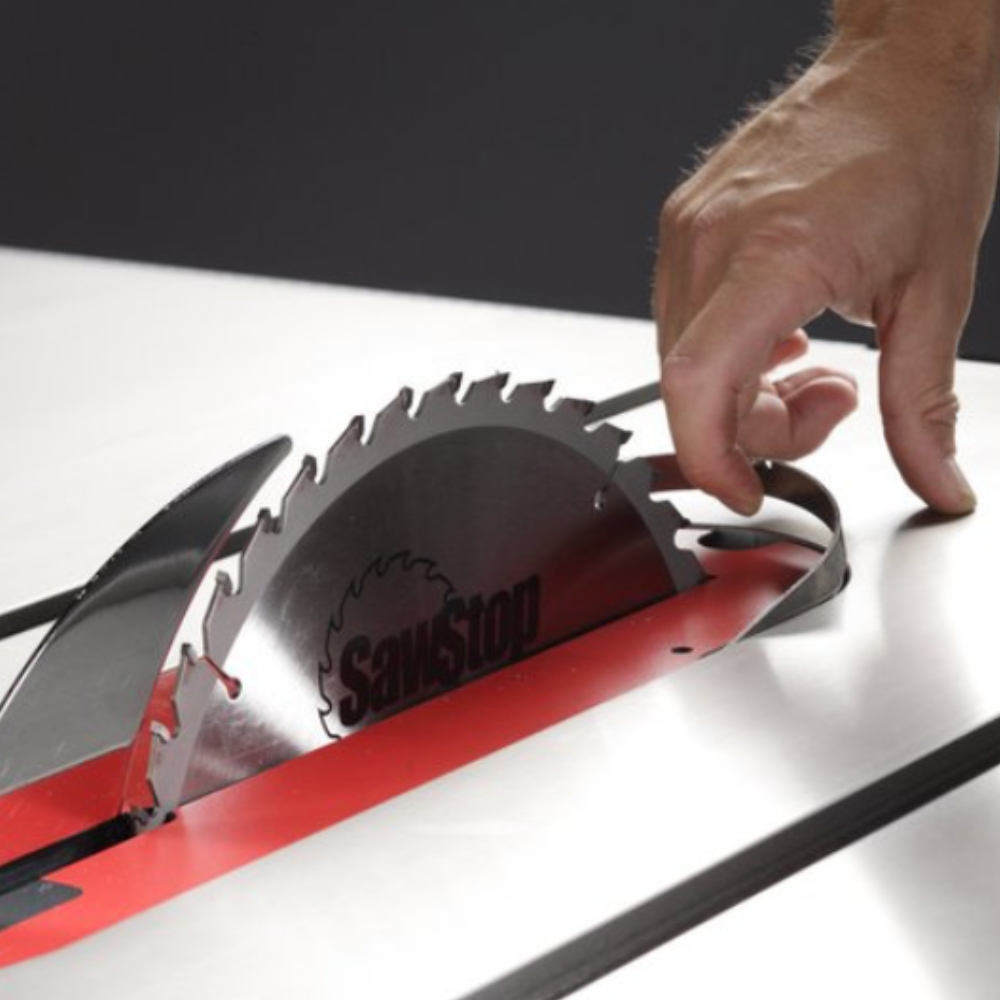
In simple terms, AIM detects skin contact and triggers an instant braking mechanism that stops the blade in a fraction of a second. This rapid response is engineered to dramatically reduce injury severity, turning what could be a life-altering accident into something far less serious.
It is this proactive, intelligent approach to safety that makes SawStop table saws widely regarded as some of the safest in the industry.
What Does Active Injury Mitigation Mean?
Active Injury Mitigation refers to a safety system that actively responds to danger. On a table saw, the danger is accidental contact with the blade. Traditional safety measures are designed to reduce the likelihood of that contact. AIM goes one step further by helping to limit the damage if contact does occur.
That is the key difference.
A blade guard helps keep your hand away from the blade. A riving knife helps reduce the risk of kickback. PPE helps protect you from dust, debris and certain workshop hazards. These are all important, but they are mostly passive safety features. They are there to support safer use, but they do not physically intervene if your finger comes into contact with the blade.
An AIM system does intervene. It recognises contact, triggers a response, and stops the blade in milliseconds.
How AIM Differs From Passive Safety Features
Passive safety features are essential, and they should never be treated as optional. A responsible table saw setup should still include the correct guarding, extraction, PPE and safe working practices. However, passive safety relies heavily on prevention.
For example:
- A blade guard creates a physical barrier between the user and the blade.
- A riving knife helps prevent timber from pinching the blade and kicking back.
- A push stick allows the operator to guide material without placing their hands too close to the cutting zone.
- PPE helps protect against flying debris, dust and noise exposure.
These measures reduce risk, but they cannot always account for the realities of workshop use. A moment of distraction, a small slip, unexpected material movement, or fatigue at the end of a long day can still lead to contact with the blade. Active Injury Mitigation is different because it is not only about stopping the mistake from happening. It is about reducing the consequences of that mistake.
That is what makes it such an important development in table saw safety.
How Does AIM Work on a Table Saw?
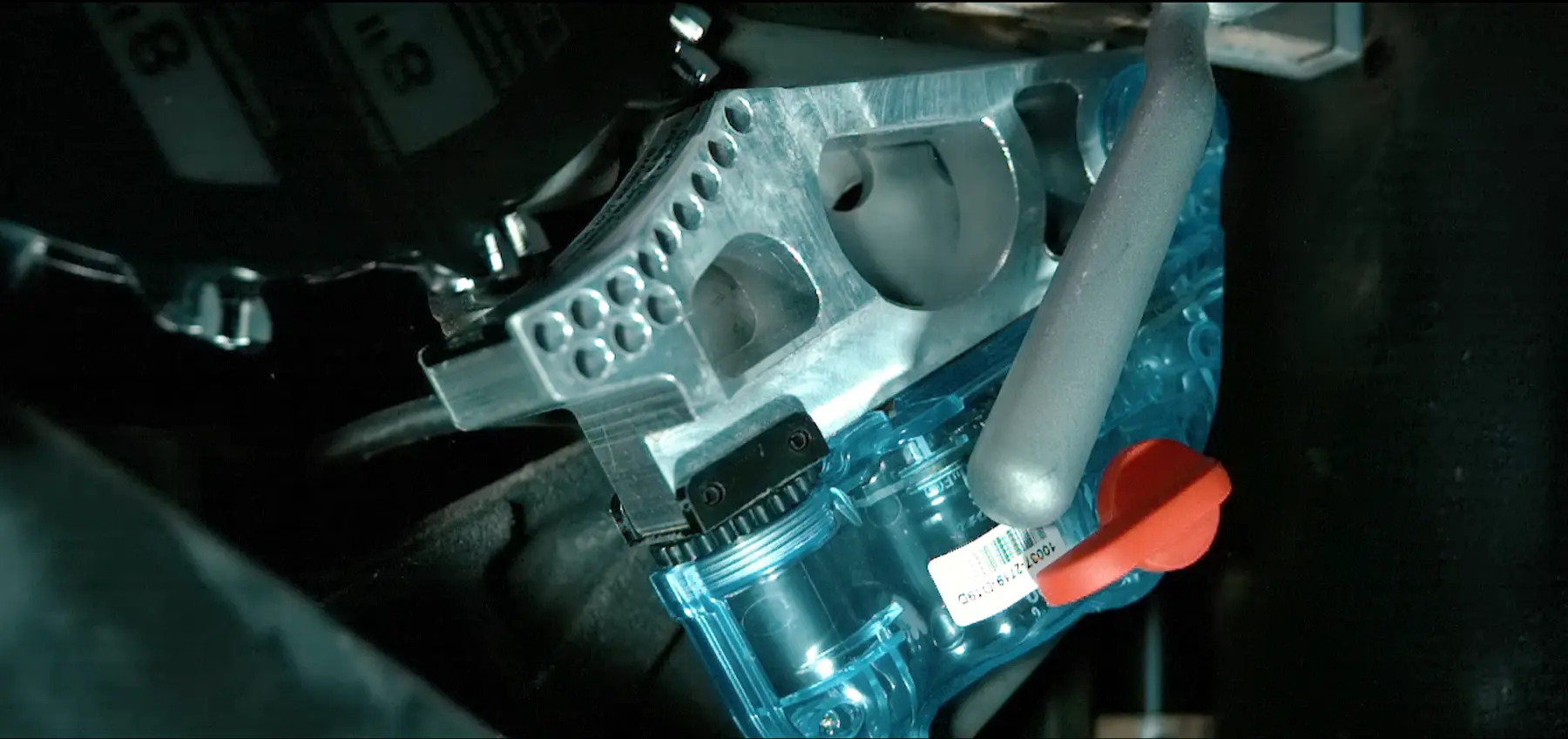
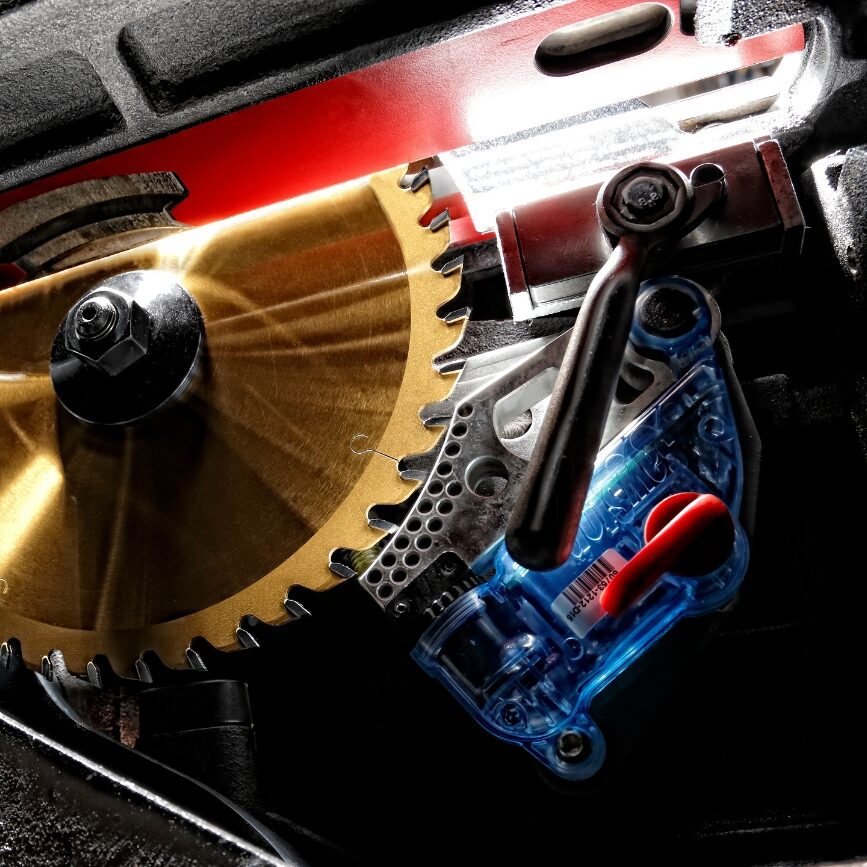
In all of SawStop’s table saws, the blade carries a small electrical signal. Human skin is conductive, so when skin touches the blade, the signal changes. The saw recognises that change almost instantly and activates the safety mechanism.
From there, the reaction happens incredibly quickly. The system triggers a brake, the blade stops, and it is pulled down away from the operator. This whole process happens in milliseconds. To the user, it can feel almost instant. One moment, the blade is spinning; the next, it has stopped. That speed is what makes the technology so powerful.
Why Milliseconds Matter
When a table saw blade is spinning at thousands of revolutions per minute, time matters more than most people realise.
A serious cut does not require seconds of contact. It can happen almost immediately. The faster the blade is stopped, the less time it has to continue cutting. That is why milliseconds matter so much in injury prevention.
AIM is not designed to make table saws risk-free. No safety system can do that. It does, however, provide a final layer of protection when other precautions are insufficient.
That final layer can make a meaningful difference.
For professional workshops, that matters because injuries affect more than the person using the saw. They can lead to downtime, lost productivity, increased costs, insurance concerns and long-term consequences for skilled workers.
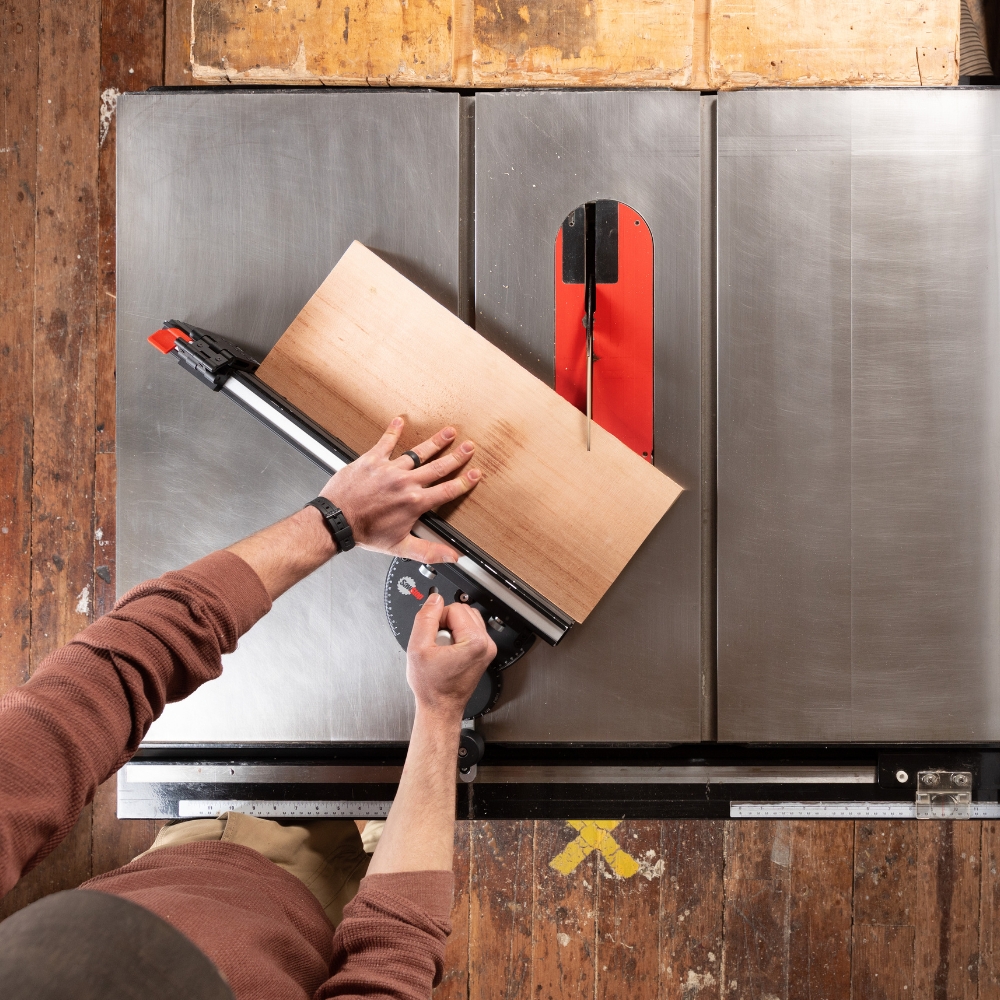
In education environments, training workshops, and for home users, the value is just as clear. Many users are still developing their confidence and technique. A system that actively helps reduce injury severity gives an added level of reassurance without replacing the need for proper training.
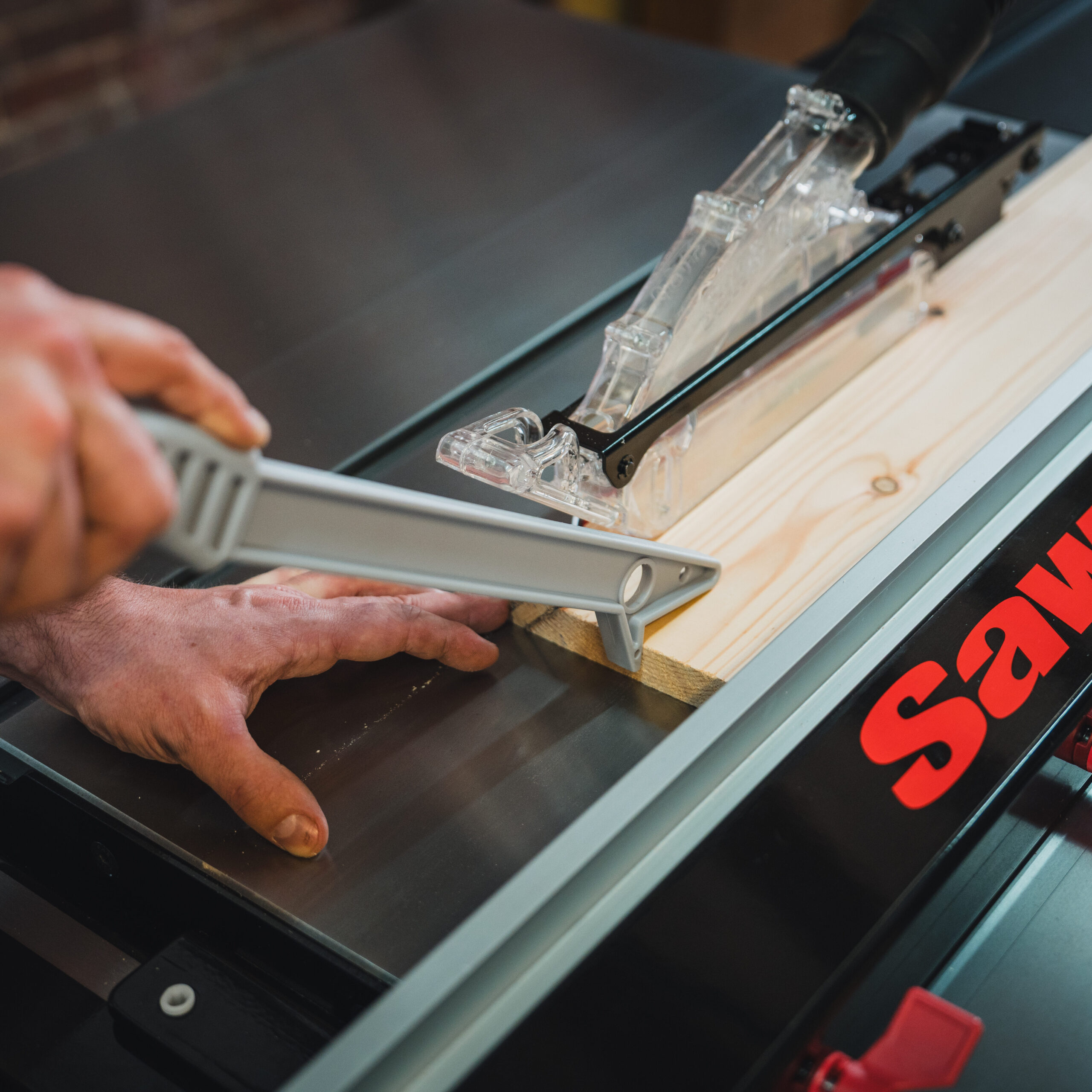
SawStop as a Benchmark Example
When people talk about Active Injury Mitigation on table saws, SawStop is often the benchmark example.
SawStop has built its reputation on this type of safety technology, combining precision table-saw performance with a system that detects skin contact and stops the blade rapidly. The brand has become closely associated with the idea that table saw safety can be more than guards and good habits alone.
This is important because AIM is not just about adding another feature to a machine. It changes what users can expect from a modern table saw.
For many workshops, especially those where safety standards are a serious priority, this kind of technology can influence purchasing decisions. The saw still needs to perform well. It still needs to be accurate, durable and practical for daily work. But safety becomes part of the performance conversation, not a separate afterthought.
A Smarter Standard for Table Saw Safety
Active Injury Mitigation does not replace traditional safety measures. It works alongside them. You still need the right guarding. You still need good dust extraction. You still need training, patience and proper technique. You still need to respect the blade every time the saw is switched on.
But AIM adds something different. It provides an active, built-in response when it is needed most. That is why it matters.
For anyone comparing table saws, understanding AIM is about more than understanding a piece of technology. It is about recognising where workshop safety is heading. The best safety systems are no longer only designed to prevent accidents. They are also designed to reduce harm in the event of an accident. And in a workshop, where a fraction of a second can change everything, that is a serious step forward.