
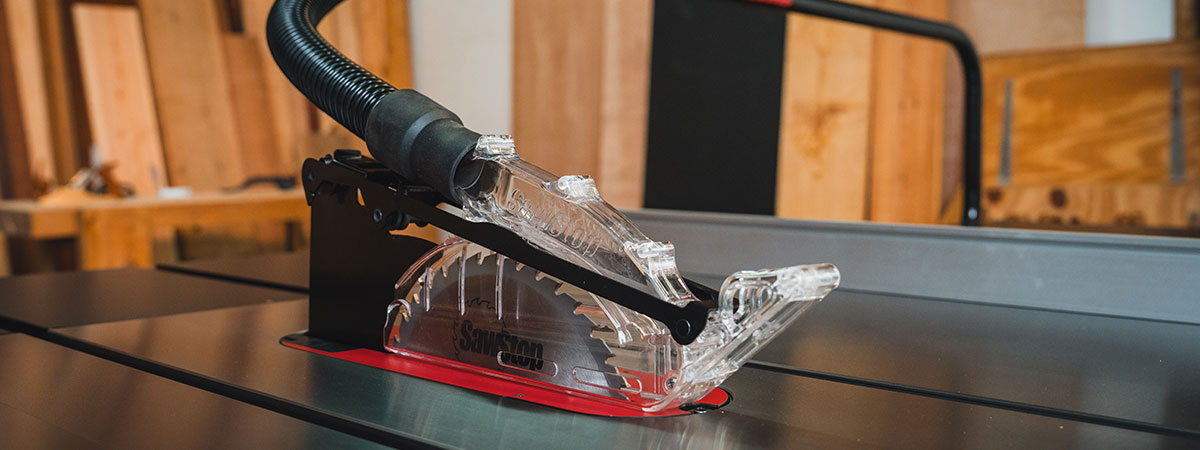
If you’ve just purchased a SawStop table saw, or you’re considering one, one of the first questions you’ll probably have is: Will my existing blades and accessories fit? Compatibility is one of the most common concerns we hear from customers, and it makes sense – SawStop’s unique safety technology depends on precision, so not every blade or accessory is suitable.
Whether you’re wondering if your 250 mm blade will fit, if you can use Dado stacks, or which brake cartridge you need, this blog will walk you through everything step by step.
Why Compatibility Matters
Unlike a traditional table saw, SawStop’s system monitors electrical conductivity in the blade. That means everything from the blade diameter to the type of coating on the teeth can affect performance. Choosing the wrong accessory can lead to poor cuts, brake activations, or, in rare cases, an inability to cut at all. Getting it right from the start saves time, money, and frustration.
SawStop Table Saw Models
Before we look at compatibility, it’s important to know which SawStop models are available:
Each model has slightly different requirements when it comes to blades and accessories. Always double‑check your owner’s manual for the specific tolerances on your machine.
Blades: What Will Fit and What Won’t
One of the most common questions we hear is: “Will my blade fit my SawStop?” The answer depends on a few key specifications.
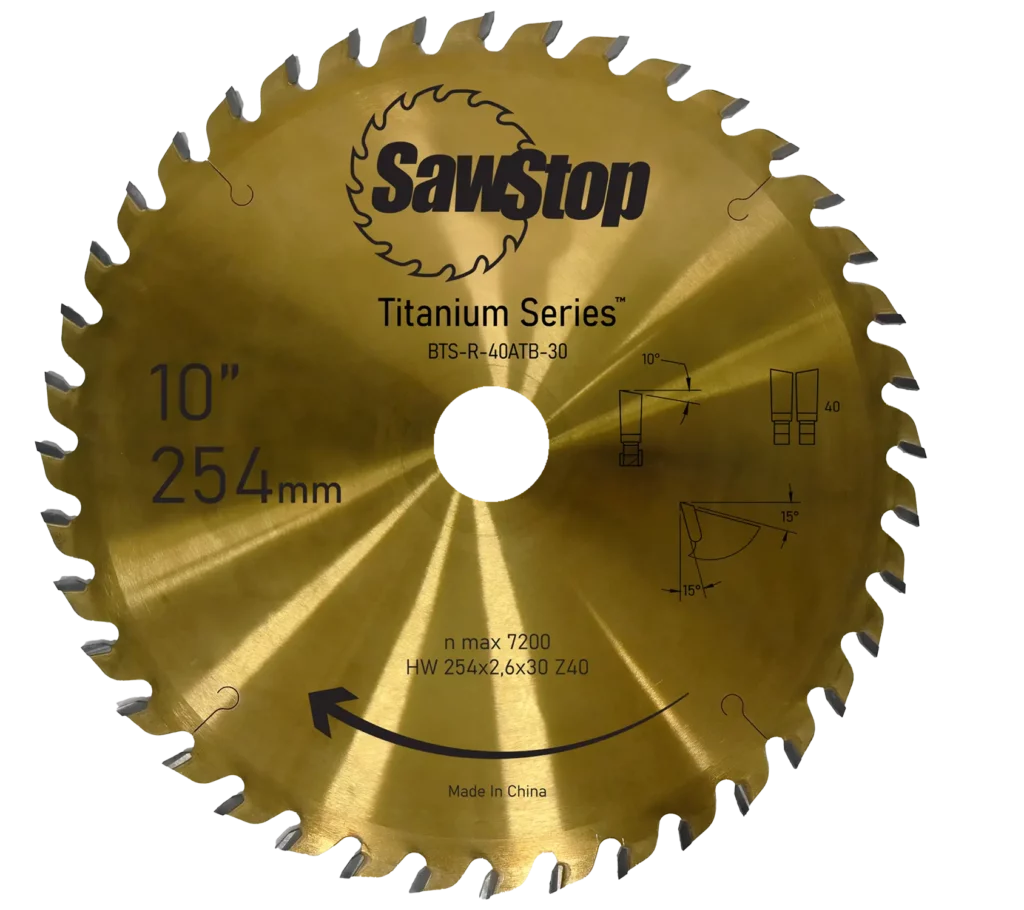
For EU models, blades must have:
- Diameter of 250–254 mm (10″)
- 30 mm bore (arbor)
- Kerf between 2.3–3.5 mm
- Plate thickness between 1.8–2.2 mm
- Conductive teeth/hub (no diamond, cermet, or fully coated teeth)
As long as your blade meets these requirements, it should be fully compatible with your SawStop table saw.
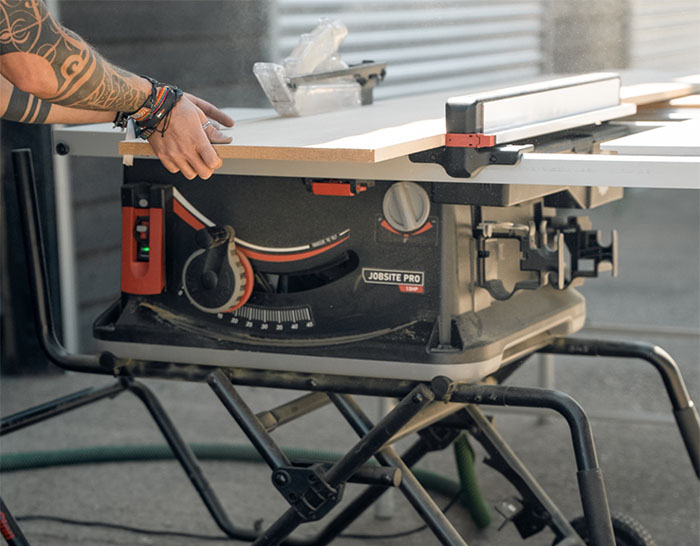
Portable Saws (Compact Table Saw / Jobsite Saw Pro)
Portable saws have a fixed brake gap, which means you cannot adjust the clearance between the brake and the blade. Because of this, the dimensions above are especially important. A blade that’s even slightly too large or too small can cause issues.
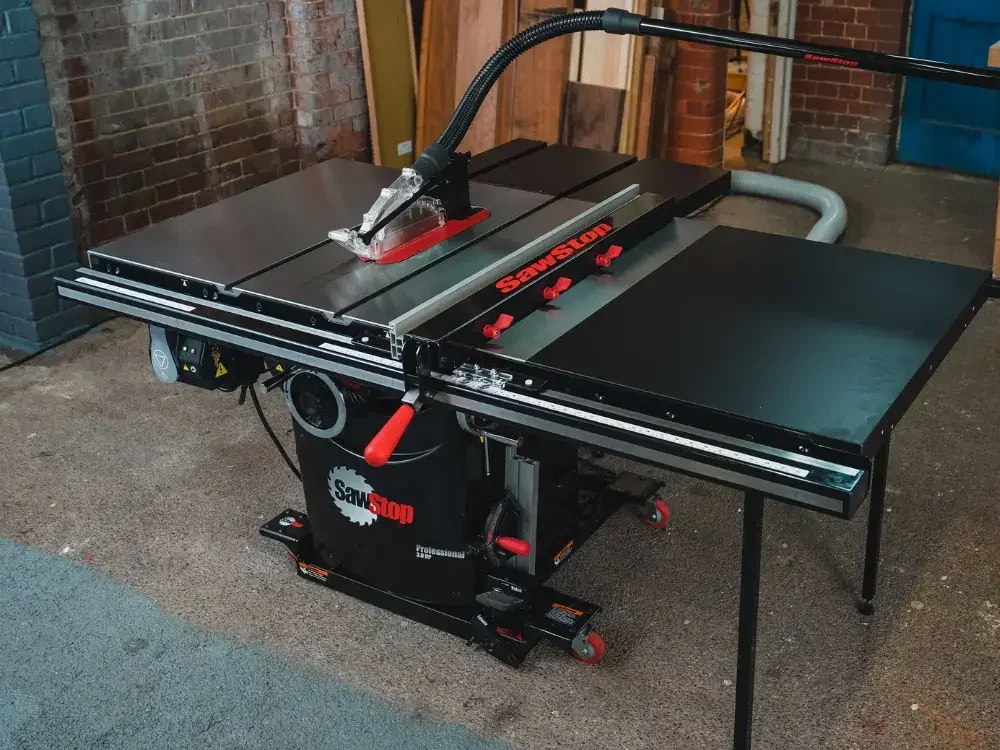
Cabinet Saws (Professional Cabinet Saw)
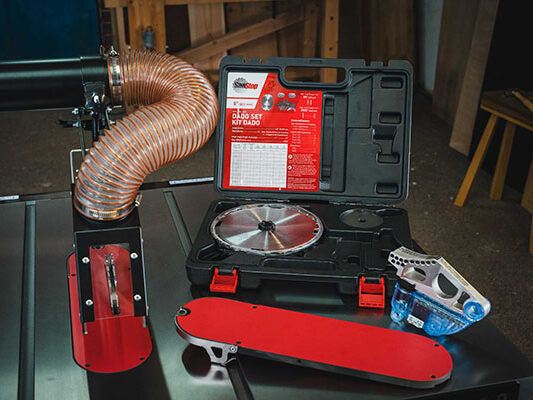
The Professional Cabinet Saw is more flexible. It still takes standard 250–254 mm blades for everyday work, but it can also be fitted with an 8″ Dado set when paired with the correct brake cartridge and floating overarm guard (more on that below).
Brake Cartridges: The Heart of the Safety System
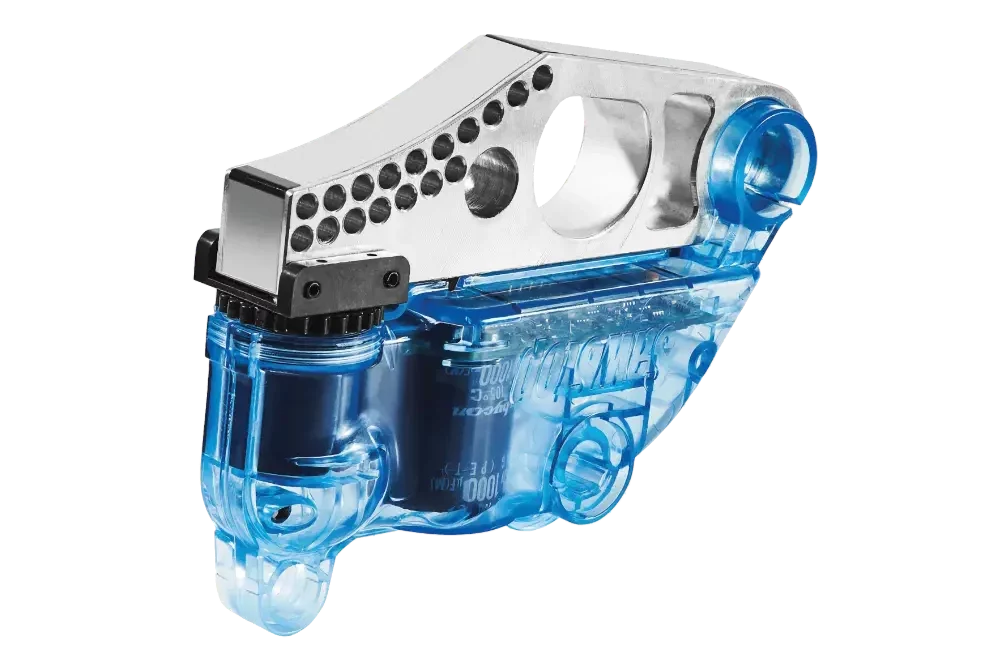
Every SawStop table saw uses a brake cartridge to stop the blade within milliseconds of detecting contact with skin. Cartridges are model‑specific, and using the wrong one will stop your saw from operating.
- Standard 10″ blades use the TSBC‑10R3‑I Standard Brake Cartridge
- 8″ Dado sets (cabinet saws only) use the Dado Brake Cartridge
It’s always wise to keep a spare cartridge on hand. Once a brake activates, it needs to be replaced before you can get back to work.
Can You Use Dado Sets in the EU?
In North America, Dado stacks are widely used on both jobsite and cabinet saws. In Europe, the rules are different.
- Portable saws (Compact Table Saw and Jobsite Saw Pro): Dado stacks are not supported. There’s no EU‑compliant floating guard solution for these models.
- Cabinet saws (Professional Cabinet Saw): Dado stacks are allowed, but only with a floating overarm guard and the 8″ Dado brake cartridge. Without both, it’s not compliant with EU safety regulations.
If you only own a SawStop Compact Table Saw or Jobsite Saw Pro, the alternative is to make multiple passes with a standard blade or use a router setup for grooves and Dados.
Guards, Riving Knives & Dust Collection
SawStop saws come with several different guard options, and which one you use depends on the cut.
- Riving knife: Prevents kickback by keeping the kerf open. On EU portable saws, it’s around 2.3 mm thick, so your blade’s kerf must be at least that wide.
- Blade guard with dust collection (portable): Ideal for through cuts, keeps your hands clear and dust out of the air.
- Floating overarm guard (cabinet): Essential when running Dado sets, as it provides guarding when the spreader‑mounted guard is removed.
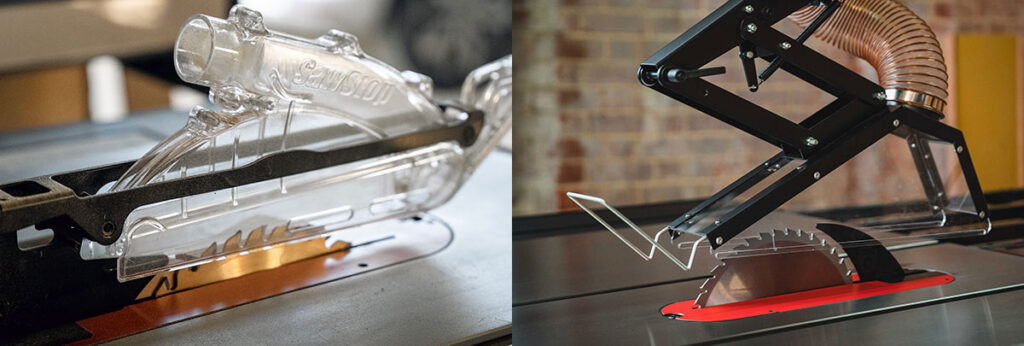
Table Inserts & Zero‑Clearance Options
Each SawStop model uses a model‑specific table insert. This ensures stability and safety, and it means inserts aren’t interchangeable across saws. For example, the Compact Table Saw zero‑clearance insert won’t fit the Jobsite Saw Pro.
For cabinet saws, there’s also a dedicated Dado insert that must be used whenever a Dado stack is installed.
Special Considerations: Wet Wood, Aluminium & Coated Blades
SawStop’s system relies on electrical conductivity, which means certain materials need extra care.
- Wet or pressure‑treated wood: May trigger the brake. Use Bypass Mode for a test cut before committing.
- Aluminium or other non‑ferrous metals: Must be cut in Bypass Mode only (safety brake disabled).
- Coated blades: Generally fine, but avoid blades where the teeth themselves are fully coated, as this may stop the safety system from detecting contact.
Key Takeaways
- Blades: Must be 250–254 mm, 30 mm bore, and meet kerf/plate specs.
- Cartridges: Standard cartridge for 10″ blades, Dado cartridge for 8″ Dado sets (cabinet saws only).
- Dado stacks: Only supported on cabinet saws in the EU, and only with the correct guard.
- Inserts & guards: Always use the model‑specific options.
- Bypass Mode: Use when cutting conductive materials or test‑cutting questionable stock.
SawStop is designed to keep you safe, but it works best when paired with the right accessories. By making sure your blades, cartridges, guards, and inserts are compatible, you’ll not only protect yourself but also get the best performance out of your saw. When in doubt, check your manual or reach out to our experts at SawStop for advice tailored to your model.