
There’s a quiet assumption in most workshops: the more experienced you are, the safer you become. It sounds logical. Experience builds control, sharpens technique, and improves awareness. But it also brings something far less discussed: familiarity. And familiarity has a way of lowering your guard.
When people search “how do most table saw accidents happen?”, they’re often expecting rare mistakes or dramatic failures, but the answer is far less obvious. Most table saw injuries don’t occur in unusual situations; they happen during routine cuts. The same processes, the same setups, the same movements repeated day in, day out by experienced users who’ve done it all before.
The Most Common Injury Scenarios
Table saw injuries rarely come from dramatic failures. They happen in moments that feel routine.
Momentary Lapses: It only takes a split second, a glance away, a quick adjustment, or a slight misalignment. The cut continues, but attention shifts just enough.
Distractions: Workshops aren’t silent environments. Conversations, background noise, or even internal distractions can interrupt focus at the wrong moment.
Fatigue: Long sessions, especially in professional settings, reduce reaction time and precision. What feels manageable early in the day becomes harder to control later on.
Repetitive Cuts: Doing the same cut repeatedly can create rhythm, and that rhythm can lead to shortcuts. Push sticks get used less. Hands move slightly closer. Small changes compound.
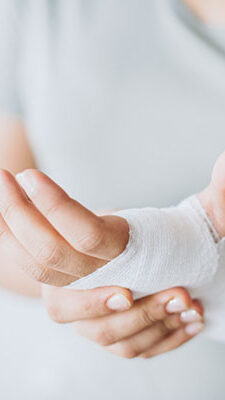
If you’re asking, “What are the hand injuries of a table saw?”, these scenarios are often the starting point. They lead to:
- Lacerations
- Deep cuts
- Partial or full finger amputations
Not because the user didn’t know better, but because the situation didn’t feel dangerous.
When Experience Becomes a Risk Factor
Experience builds confidence. Over time, that confidence turns into muscle memory. You stop thinking about every movement. You trust your setup. You trust yourself. Most of the time, that works.
But muscle memory has a downside: it reduces the need for conscious checks. You rely on instinct rather than deliberate positioning. And when something changes, even slightly, your reaction follows the routine, not the reality in front of you.
This is where experienced users can become vulnerable.
Real-World Scenarios: Routine Cuts, Unexpected Outcomes
The majority of incidents don’t come from complex or risky cuts. They come from everyday tasks.
- Ripping stock to width, repeated passes, consistent setup, minimal variation
- Trimming small pieces, hands naturally move closer to maintain control
- Final passes on a project, confidence is high, attention may dip
- Quick adjustments mid-cut, reacting to material movement rather than stopping
In each case, the cut itself isn’t unusual. What changes is timing, positioning, or focus. And because the task feels familiar, the risk isn’t always recognised in the moment.
The Role of the Environment
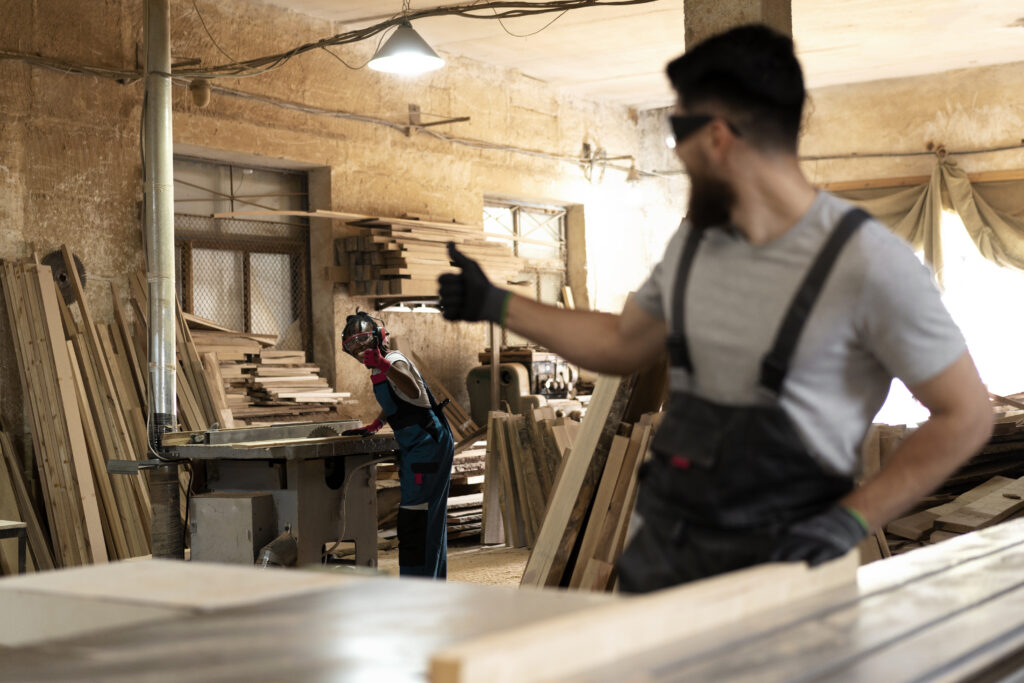
It’s not just the user; the environment plays a significant role in how accidents happen.
Noise: Busy workshops make communication harder and reduce concentration.
Time Pressure: Deadlines encourage speed. Speed reduces margin for error.
Shared Spaces: Tools are adjusted by different users. Settings aren’t always checked as thoroughly.
Complacency: When nothing has gone wrong for a long time, it’s easy to assume nothing will.
These factors don’t cause accidents on their own, but they create conditions where small mistakes are more likely.
Experience Reduces Risk, But Doesn’t Remove It
It’s important to be clear: experience matters.
Skilled users:
- Set up tools correctly
- Understand material behaviour
- Work more efficiently and accurately
All of that lowers risk, but it doesn’t eliminate it.
The fundamental conditions remain the same:
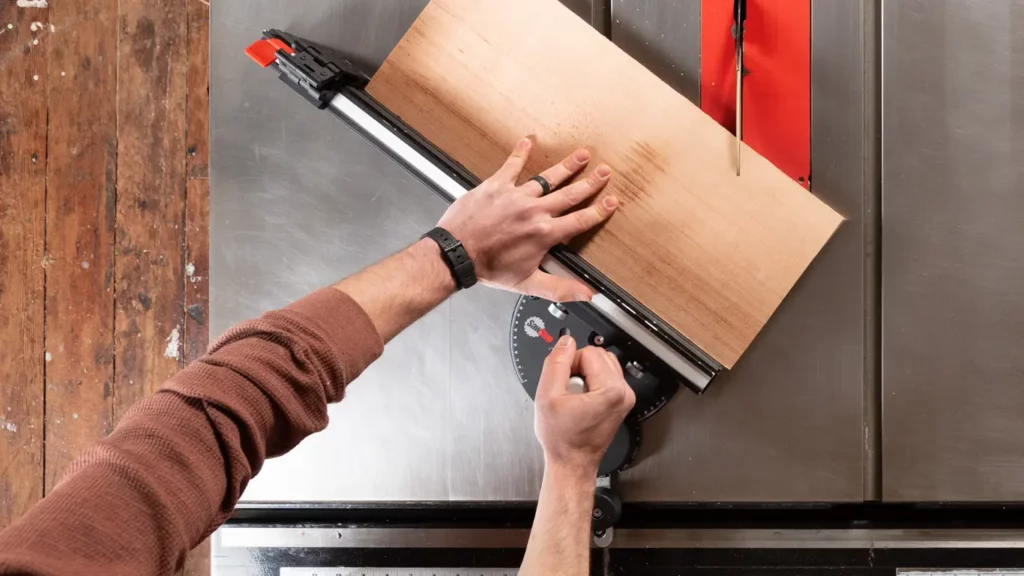
- An exposed, high-speed blade
- Hands working in close proximity
- A process that depends on consistent control
Even with perfect technique, there’s still a reliance on human precision, every single time.
Why the Industry Is Rethinking Safety
If most accidents occur during routine work and experienced users are still affected, the issue isn’t just about training or awareness. It’s the gap between expected behaviour and real-world conditions. That’s why there’s growing interest in systems that don’t just prevent accidents, but respond when something goes wrong.
Where SawStop Comes In
SawStop approaches the problem from a different angle. Instead of relying solely on user behaviour, our technology is designed to act the moment contact is made.
How Effective Is SawStop?
A common question is “How effective is SawStop?”
The answer lies in how the system functions:
- It detects contact with skin almost instantly
- It triggers a brake that stops the blade in milliseconds
- The blade drops below the table, limiting injury severity
This doesn’t remove the need for safe working practices. It adds a layer that operates independently of them. Another question often asked is “how many fingers has SawStop saved?” While exact numbers vary, the system has been credited with preventing thousands of serious injuries globally.
The SawStop Range
The SawStop range of table saws is designed to meet different workshop demands without compromising safety.
Ideal for smaller workshops or limited spaces, the Compact Table Saw delivers precision cutting in a highly portable format. Despite its size, it still incorporates SawStop’s AIM technology, providing the same rapid response protection as larger models.
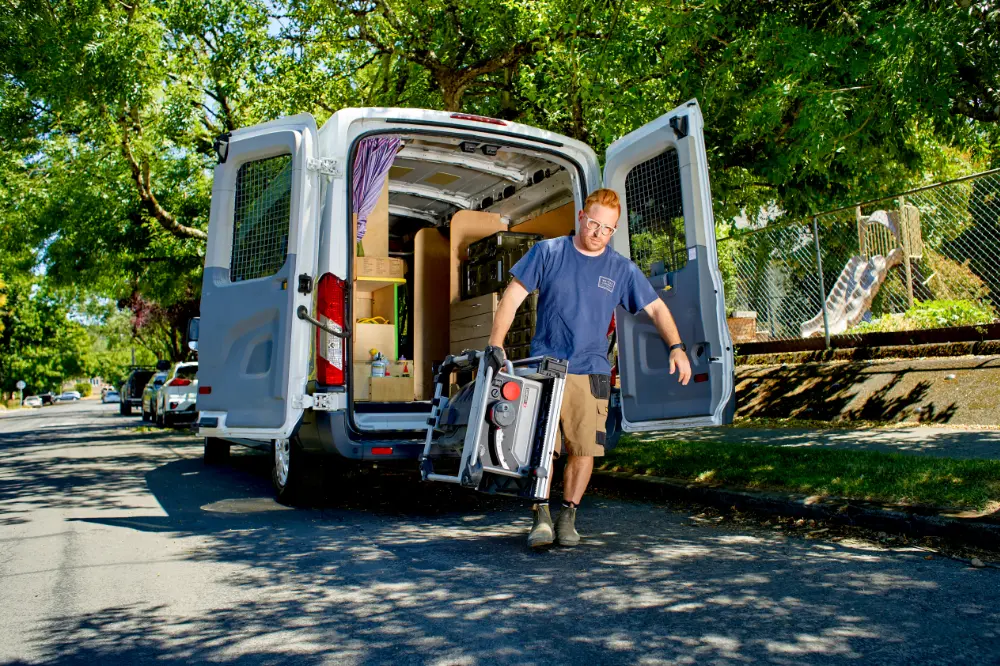
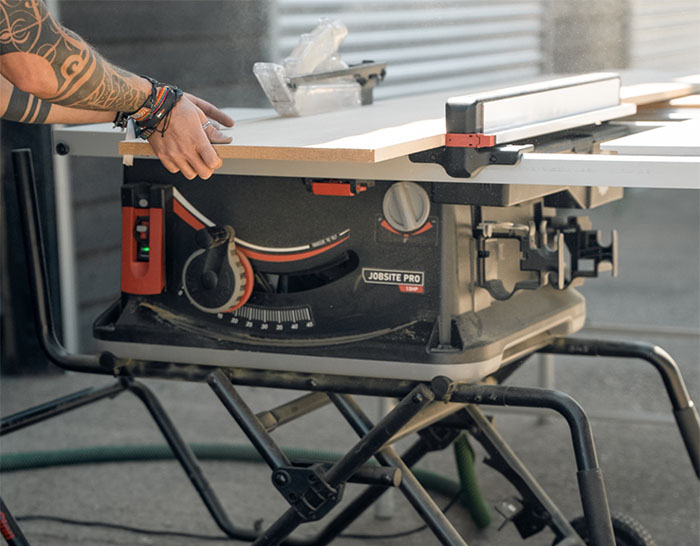
Built for portability without sacrificing performance, the Jobsite Saw Pro is designed for contractors and trades working across multiple sites. It combines robust construction with mobility, while maintaining full integration of the AIM safety system.
Experience The Professional Cabinet Saw
Engineered for high-demand workshop environments, the Professional Cabinet Saw is built for power, accuracy, and continuous use. It represents the most advanced expression of SawStop technology, delivering industrial-grade performance while integrating its injury mitigation system.
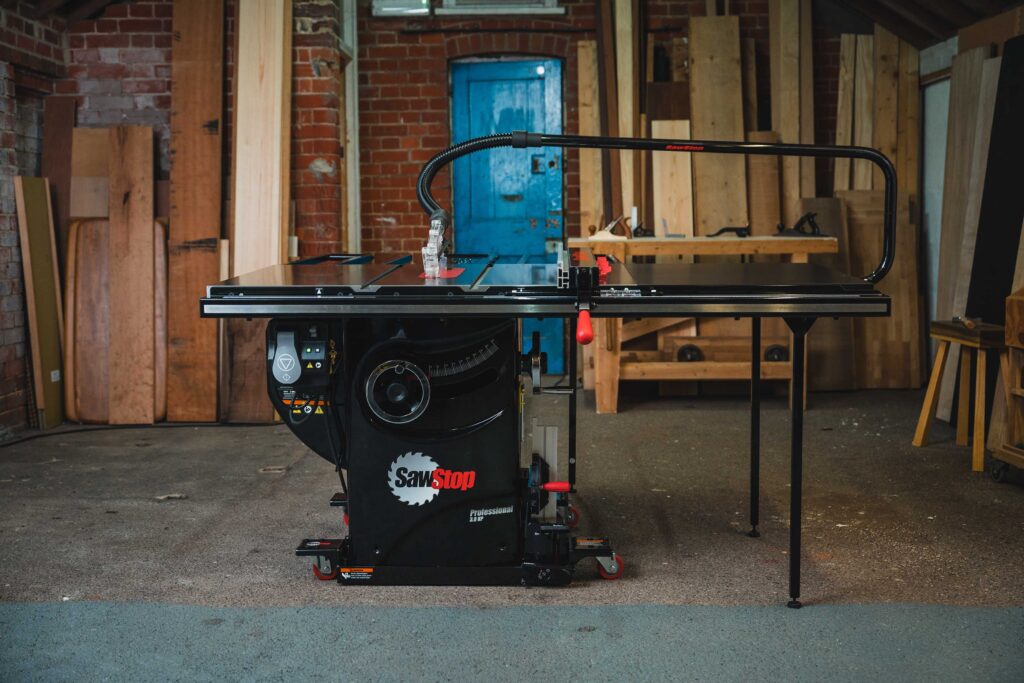
Across the entire range, the principle remains the same: high-performance cutting tools designed with active protection at their core, responding in the moments where traditional safety measures can fall short.
What This Means in Practice
Table saw safety isn’t just about knowing what to do. It’s about recognising that even when you do everything right, there’s still a margin for error. Reducing that margin further means looking beyond traditional safeguards and considering how tools respond when unexpected events occur.