
Walk into almost any workshop, professional or hobbyist, and one machine is guaranteed to be at the centre of it all: the table saw. It’s precise, powerful, and incredibly efficient. But it’s also one of the most dangerous tools in space.
Despite advancements in tooling, training, and safety awareness, table saw injuries remain stubbornly consistent year after year. This isn’t about fearmongering, it’s about understanding why the risk still exists, and what the industry is (and isn’t) doing about it.
The Reality of Table Saw Injuries
When we talk about table saw injury statistics, the numbers are difficult to ignore.
- Tens of thousands of injuries are reported annually worldwide
- A significant portion involves hand and finger trauma
- Many incidents occur even among experienced users
If you’re asking “how many table saw injuries per year?”, estimates commonly sit in the tens of thousands globally, with thousands involving serious hand injuries or amputations. And perhaps the most sobering question: what percentage of woodworkers lose fingers? While exact figures vary, finger injuries remain one of the most common workshop accidents, particularly involving table saws.
The key takeaway isn’t the exact number; it’s the consistency. These incidents are not declining at the rate you’d expect given modern safety standards.
Why Table Saws Are Inherently High-Risk
Table saws combine several risk factors that are rarely present together in other tools:
1. Constant Blade Exposure
Unlike many power tools, the blade is always exposed above the table surface during operation.
2. High-Speed Rotation
Blades rotate at thousands of RPM, meaning contact happens in milliseconds, far faster than human reaction time.
3. Material Movement
You’re not just controlling the tool, you’re controlling the material being fed into it. Kickback, binding, or misalignment can instantly change the situation.
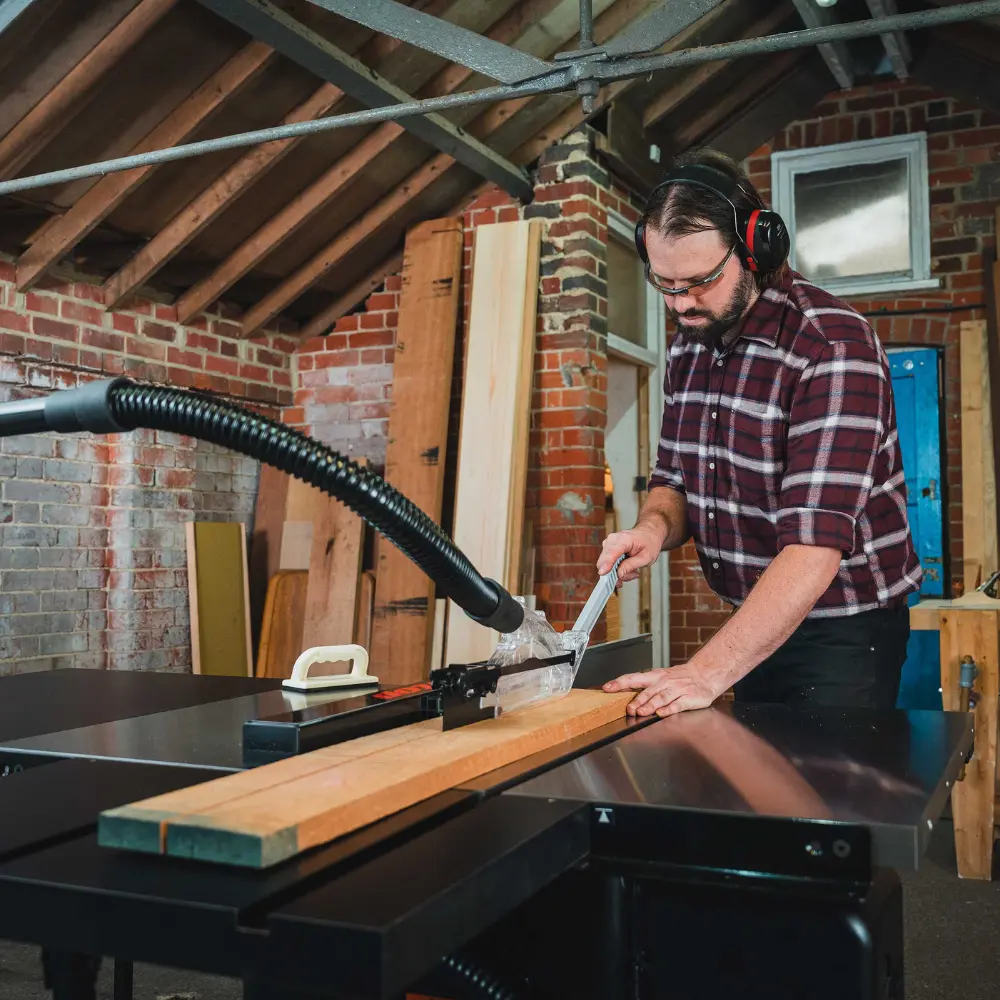
4. Proximity of Hands to Blade
Even with push sticks and guides, hands often operate close to the cutting area, especially during fine or repetitive work. This combination creates a unique environment where precision and danger coexist constantly.
Where Do Most Table Saw Injuries Happen?
There’s a common assumption that injuries mainly happen in high-pressure industrial environments. In reality, the risk is far more widespread.
Trade Workshops
Professionals working at speed, often under time constraints, can experience fatigue or momentary lapses in concentration.
Educational Settings
Schools and training environments introduce less experienced users to powerful machinery, often for the first time.
Shared Workshops
Multiple users, varying skill levels, and inconsistent setup standards increase risk exposure.
Home Workshops
DIY users may lack formal training, rely on older equipment, or underestimate the risks involved.
The Dangerous Myth: “Modern Tools Are Safe by Default”
One of the biggest misconceptions in woodworking is that newer tools are inherently safe. Yes, modern table saws come with improvements:
- Better guards
- Riving knives
- Anti-kickback pawls
- Improved dust extraction
But these are preventative features, not fail-safe systems. They reduce risk, they don’t eliminate it. And critically, many of these features:
- Are removed for certain cuts
- Are bypassed for convenience
- Depend heavily on the correct user setup
So while the tools have evolved, the core risk, exposed high-speed blades, hasn’t changed.
A Shift in Thinking: From Prevention to Intelligent Protection
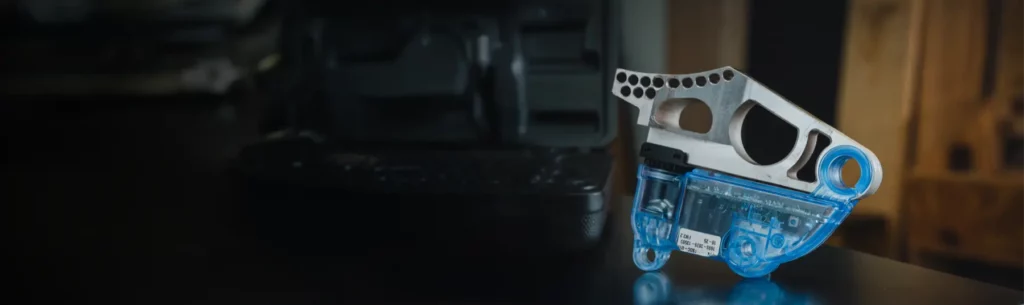
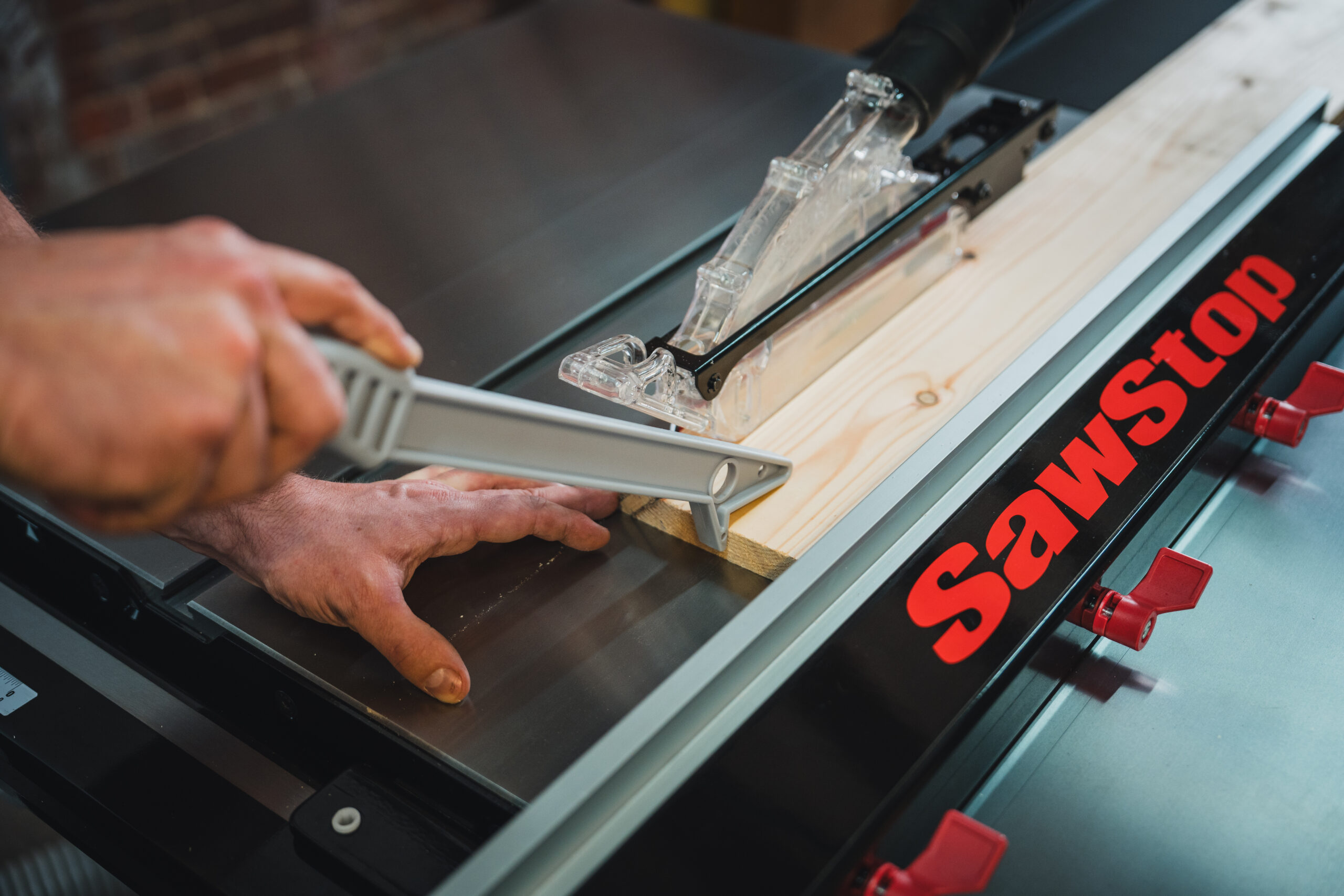
This is where SawStop has redefined expectations with our advanced Active Injury Mitigation (AIM) system. Rather than relying solely on preventative measures, the technology found in our table saws is designed to actively protect the user at the point of contact.
The AIM system detects accidental contact with the blade and reacts in milliseconds, stopping the blade and dropping it below the table almost instantly. It’s a fundamental shift in safety thinking: not just reducing the risk of accidents, but dramatically minimising the severity of injury when they occur.
The SawStop Approach to Table Saw Safety
SawStop has built its entire reputation around addressing the exact problem traditional safety measures couldn’t fully solve. At the core of our range is the AIM (Active Injury Mitigation) system, a fundamentally different approach to safety.
How the AIM System Works
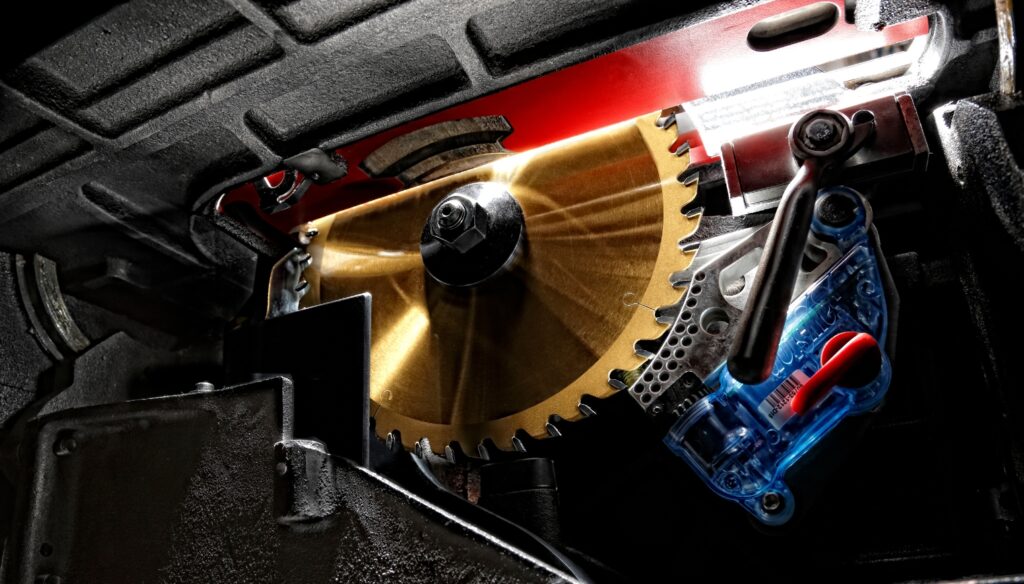
- The system continuously monitors the blade for contact with skin
- The moment contact is detected, a brake is triggered
- The blade stops within milliseconds and drops below the table
The result: A potentially life-changing injury can be reduced to a minor incident.
Key Features Across the SawStop Range
Beyond the AIM system, SawStop table saws are built with professional-grade performance and safety in mind:
- Active Injury Mitigation (AIM) technology
- High-quality fences for precision cutting
- High-performance build quality for long-term durability
- Dust extraction integration
- Models suited for workshops, job sites, and educational environments
This isn’t just about adding a safety feature; it’s about re-engineering the table saw around user protection.
Why This Matters for the Industry
Table saw injuries aren’t rare, and they’re not limited to inexperienced users. They’re a persistent issue across:
- Professional trades
- Education sectors
- Shared and home workshops
The real challenge isn’t awareness, it’s acceptance that:
- Even skilled users can make mistakes
- Even modern tools can cause serious injury
- Even with safeguards, risk still exists
What’s changing is how that risk is managed.
Final Thought
Table saws will remain a core part of woodworking. That’s not going to change. What can change is how risk is managed. Understanding the scale of table saw injuries, acknowledging that they’re not confined to beginners, and recognising the limits of traditional safeguards all point to the same conclusion: Safety isn’t just about avoiding mistakes. It’s about being prepared for the moment one happens.