
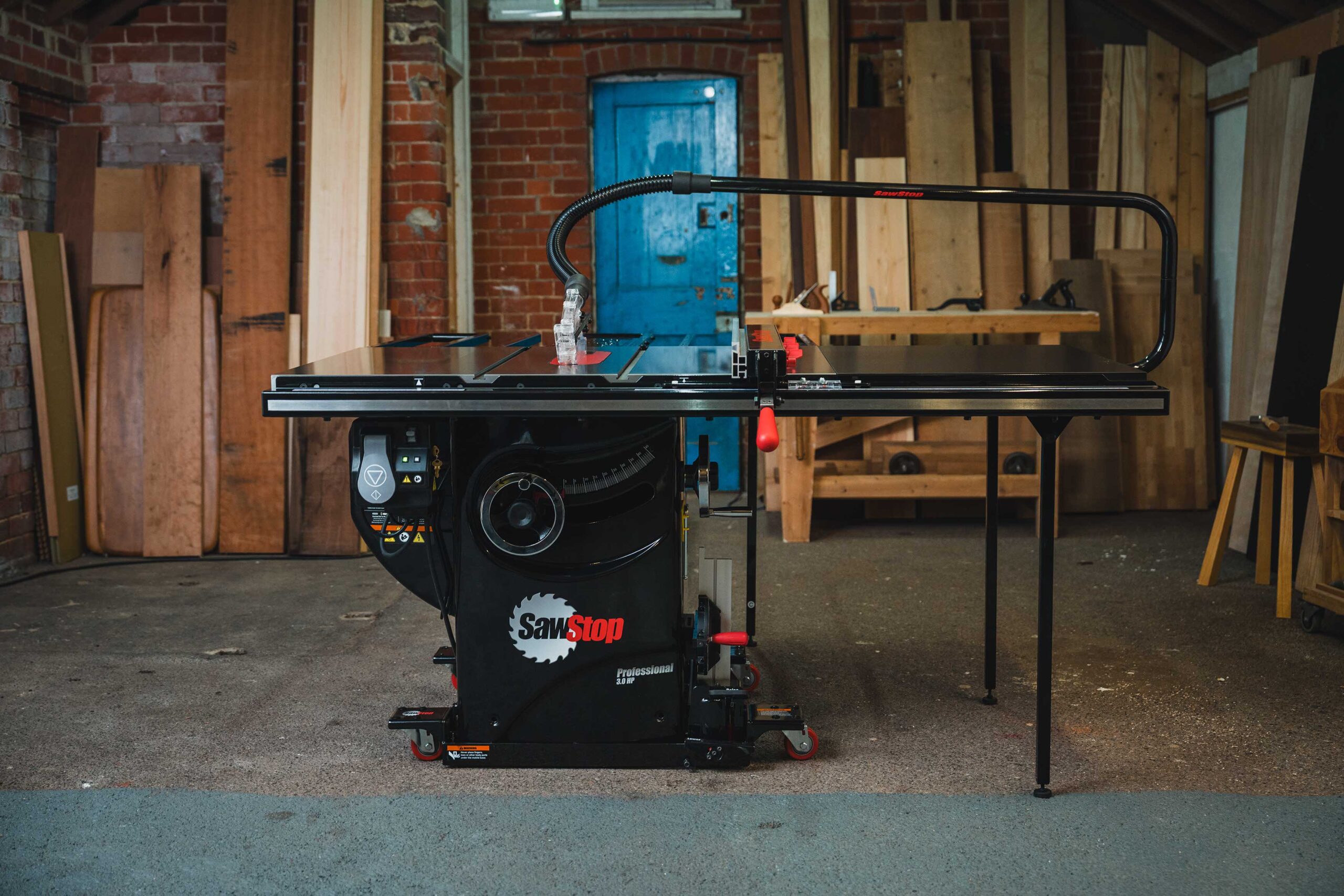
In recent years, the sliding panel saw has become a common style of saw in many professional workshops in Europe, in contrast to the cabinet saw which everyone is using in American workshops. In fact many European woodworkers are taught on large sliding panel saws and cabinet saws can feel quiet ‘alien’ or unfamiliar for woodworking operations and there is a perception that the panel saw must be the pinnacle of performance if that’s what the professionals are using… but are the Americans really all wrong and missing out?
Of course the answer comes down to how a panel saw or cabinet saw would best fit you and your woodworking career and for many the cabinet saw can be a great fit, even a better fit, depending on the type of woodworking you do and the type of workshop you have.
The case for sliding panel saws
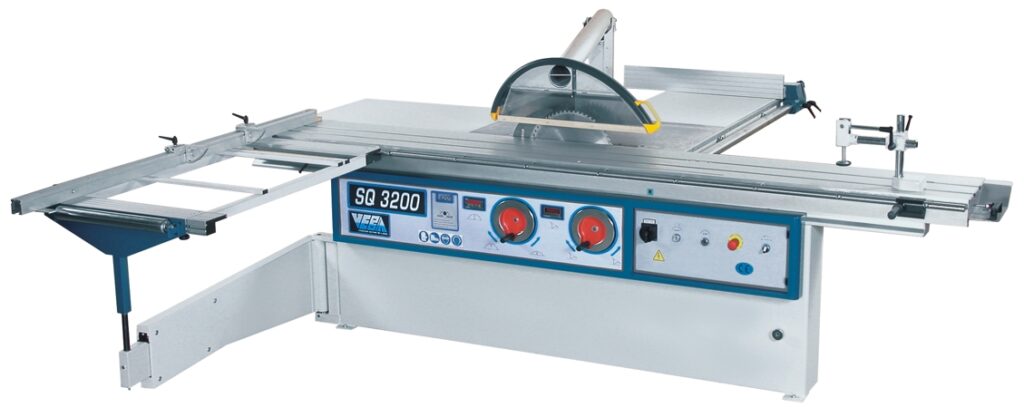
Sliding panel saws excel at cutting panels, obviously, and what we mean by that is big sheets where it’s important to have a highly accurate cuts on a long length of material by securely holding the sheet and very smoothly allowing it to move through the blade to make the cut. Fundamentally its design is based around maximizing support for the workpiece, using a highly accurate cantilever system and smooth bearings to minimize vibrations or movements of the workpiece other than that straight cutting motion.
But being excellent at one thing often means that other areas can become compromised, and that’s the case with sliding panel saws. Very often a big footprint is needed; they typically cost more, are built with industrial workshops in-mind, and are not very well suited to other common cutting techniques that you may want to do.
They can be great if you are cutting big panels all day, but if your woodworking projects are more varied and you don’t have that need for speed and efficiency that many professional cabinet makers do, then a cabinet saw can still cut panels very well whilst offering additional benefits.
5 reasons to choose the SawStop Professional Cabinet saw instead
- Versatility of cutting capability
- Smaller and more accessible
- Better designed for craftsmen and hobbyists
- More affordable for many
- Safety for all your projects
1. Versatility of cutting capability
The Professional Cabinet Saw can of course also be used to cut large sheet goods either using the accurate Biesemeyer style T-Glide Advance Fence System to the right of the blade or using cross-cutting on a Sliding Crosscut Table which supports a similar motion of sliding a workpiece to the left of the blade; whilst there are also a number of useful woodworking operations that are impractical on a panel saw but the Professional Cabinet Saw is very well suited to.
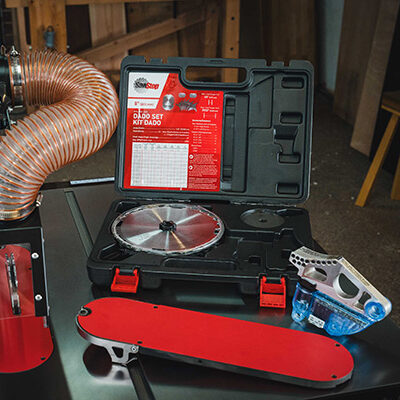
Dados are a good example which the majority of panel saws are not capable of supporting, but cabinet saws can be extended further with jigs and sleds which help perform common tasks such as tenoning, or fine joinery such as Kumiko work, or even more complex work like cove-cutting or scalloping.
In short the cabinet saw has a more versatile design with many accessories available to help maximize it’s use beyond ripping big sheet goods.
2. Smaller and more accessible
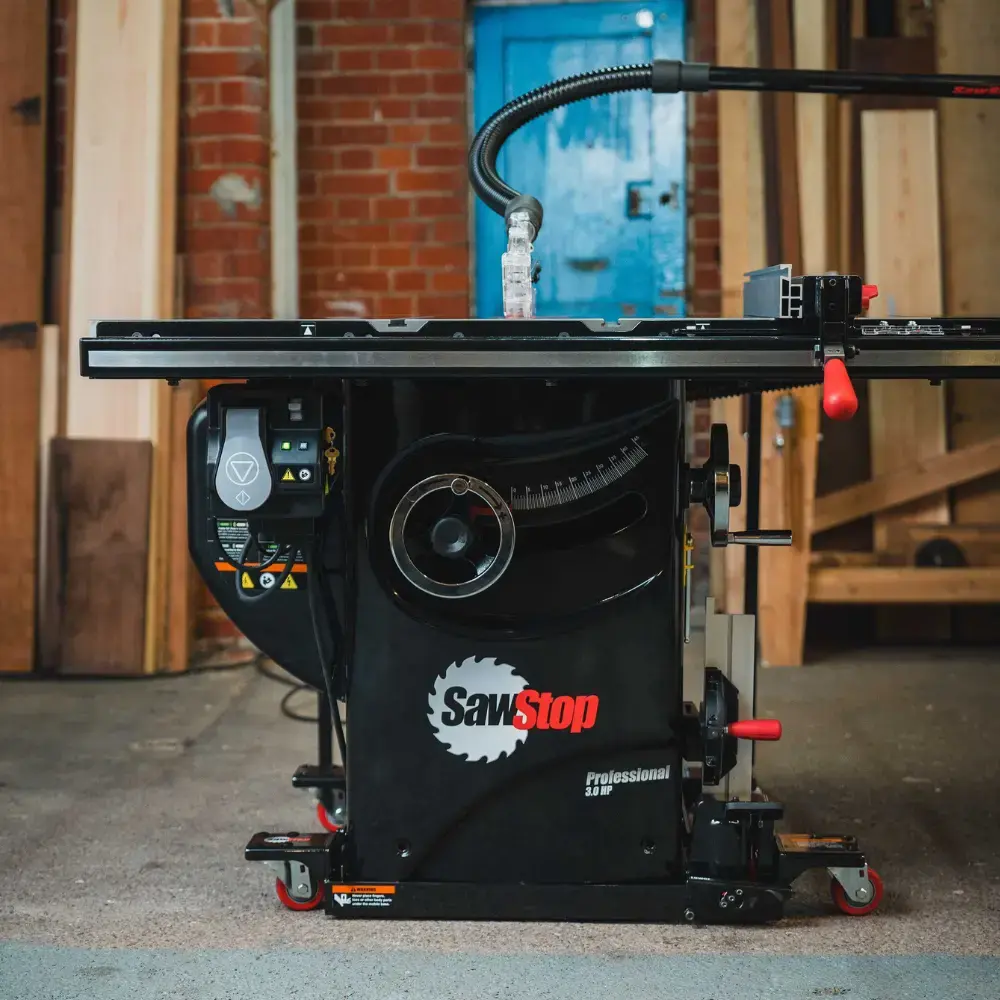
Cabinet saws aren’t designed to have that big ‘throw’ of the cantilever sliding system that characterizes panel saws and are based around a much more compact cabinet with an extending table bed to the left and even more so to the right of the blade.
That makes them more suited to many small workshops or even just better use of space in large workshops. They can be transported and installed much easier, and the Industrial Mobile Base option for the SawStop Professional Cabinet Saw allows even more flexibility making a saw of up to 450kg easy to lift up and move around to maximize workshop space.
3. Better designed for craftsmen and hobbyists
Many panel saws are designed as industrial machines and don’t have the consumer-friendly features of the SawStop Professional Cabinet Saw.
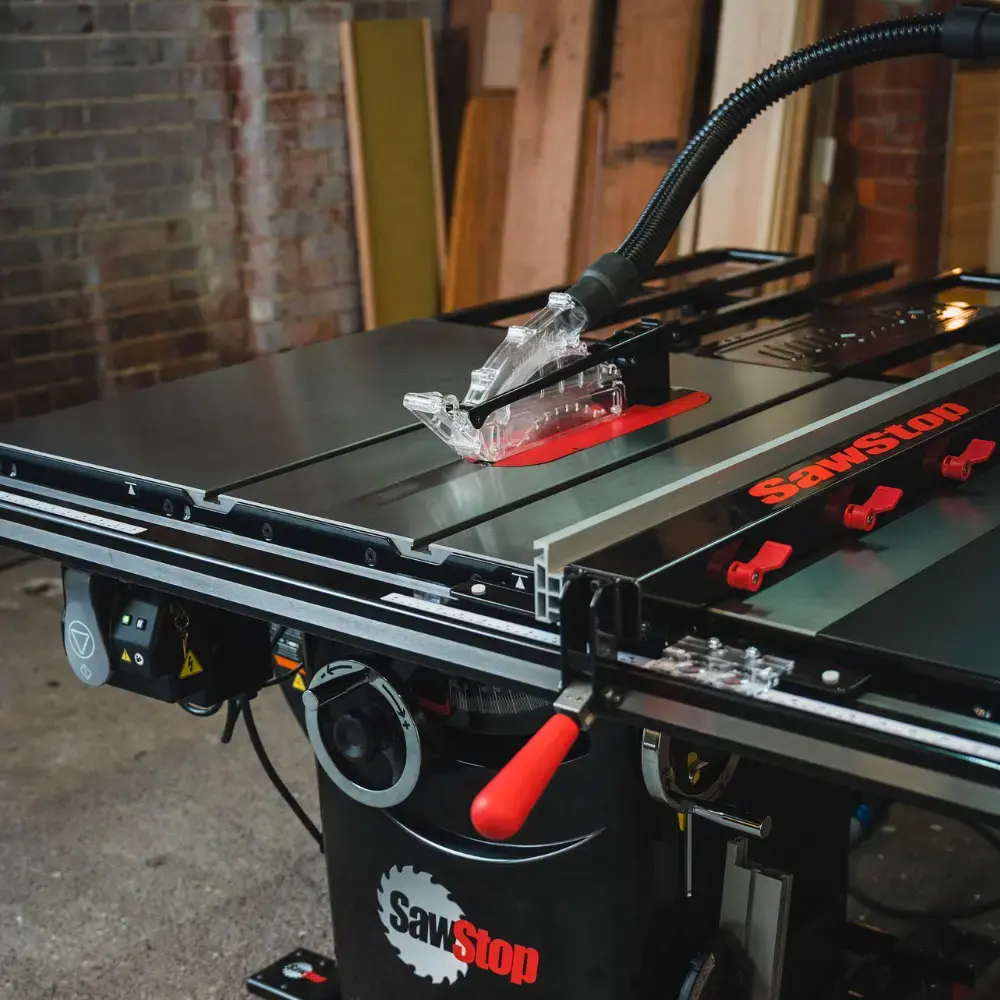
Dust collection is a great example of this and is a key concern for many craftsmen and hobbyists who want a professional machine but also want to keep their lungs clean using smaller dust extraction systems – the Overarm Dust Collection system with its MicroGuard and zero-clearance insert plate helps remove over 95% of dust, whereas many panel saws at a comparable price use only poorly designed guards and dust piping.
Many accessories such as the Revolution Miter Gauges or 3rd party accessories extend the suitability further for even the most demanding craftsmen.
4. More affordable for many
Panel saws are often out of the price range of many people as they are designed as industrial machines, sometimes even needing specialist installation and calibration as well as expensive transportation. On top of that, given that the Professional Cabinet Saw is so versatile, you could very well save money by not needing other machines, for example using a dado blade in the Professional Cabinet Saw instead of putting more stress on a router. The cabinet saw is often considered the heart of the workshop for this reason of being versatile and one of the best value investments for a variety of needs in your workshop.
5. Safety for all your projects
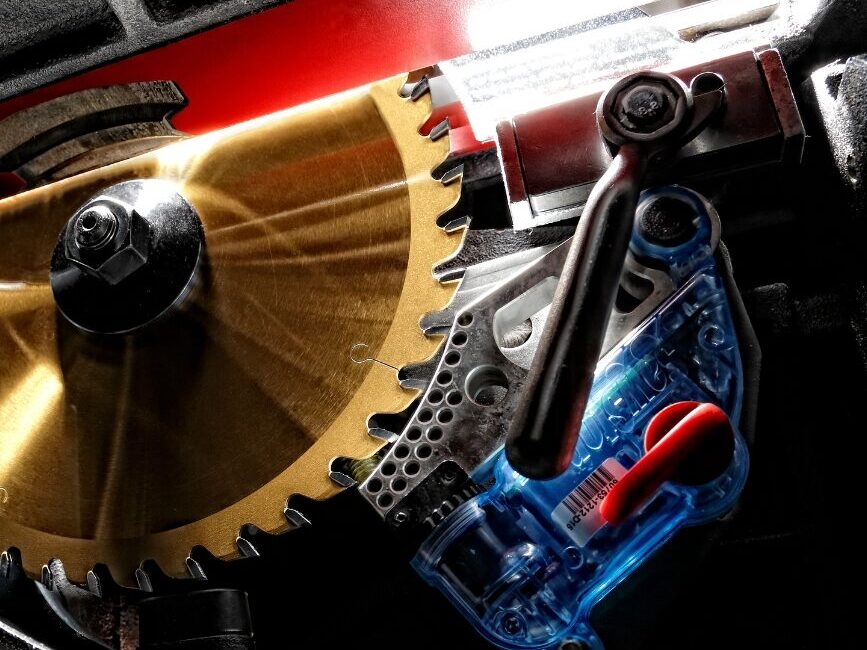
Of course, the SawStop Professional Cabinet Saw has a massive advantage over other saws with the Active Injury Mitigation system that is always keeping you safe. But the design of the cabinet saw also means that a wider variety of operations can be performed safely and there are many 3rd party accessories such as featherboards, stock guides, push blocks and sleds that can fit in the standard slots and can help reduce the risk of accidents.
Ultimately for many, the peace of mind of owning a SawStop is a huge benefit as many thousands of customers who have had near misses would agree!